The Story Behind Folfol’s Ceiling

The Story Behind Folfol’s Ceiling
November 8, 2025

The Upside-down Garden

In Damascus, gardens grow on rooftops.

Bougainvillea climbs over courtyard walls and spills down in curtains of red and purple. Terracotta pots line every window ledge, every balcony rail, every outdoor stair. The city's relationship with planted things is vertical — plants reach upward toward light, and the light comes down to meet them. It is one of the most persistently beautiful things about Syrian domestic life, and one of the least expected things to encounter in a fast-casual restaurant in Montréal.

That surprise was exactly what we were looking for.

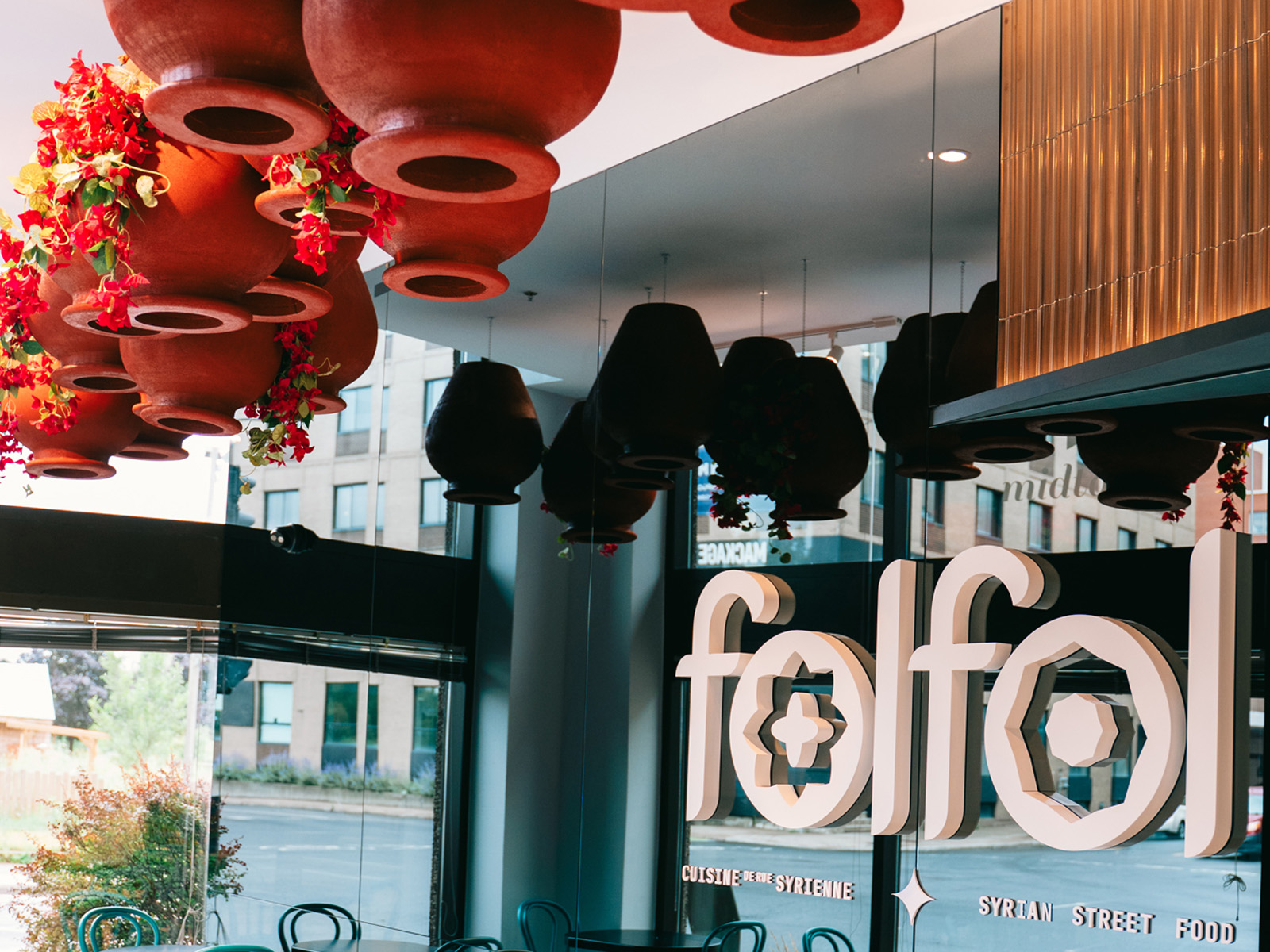
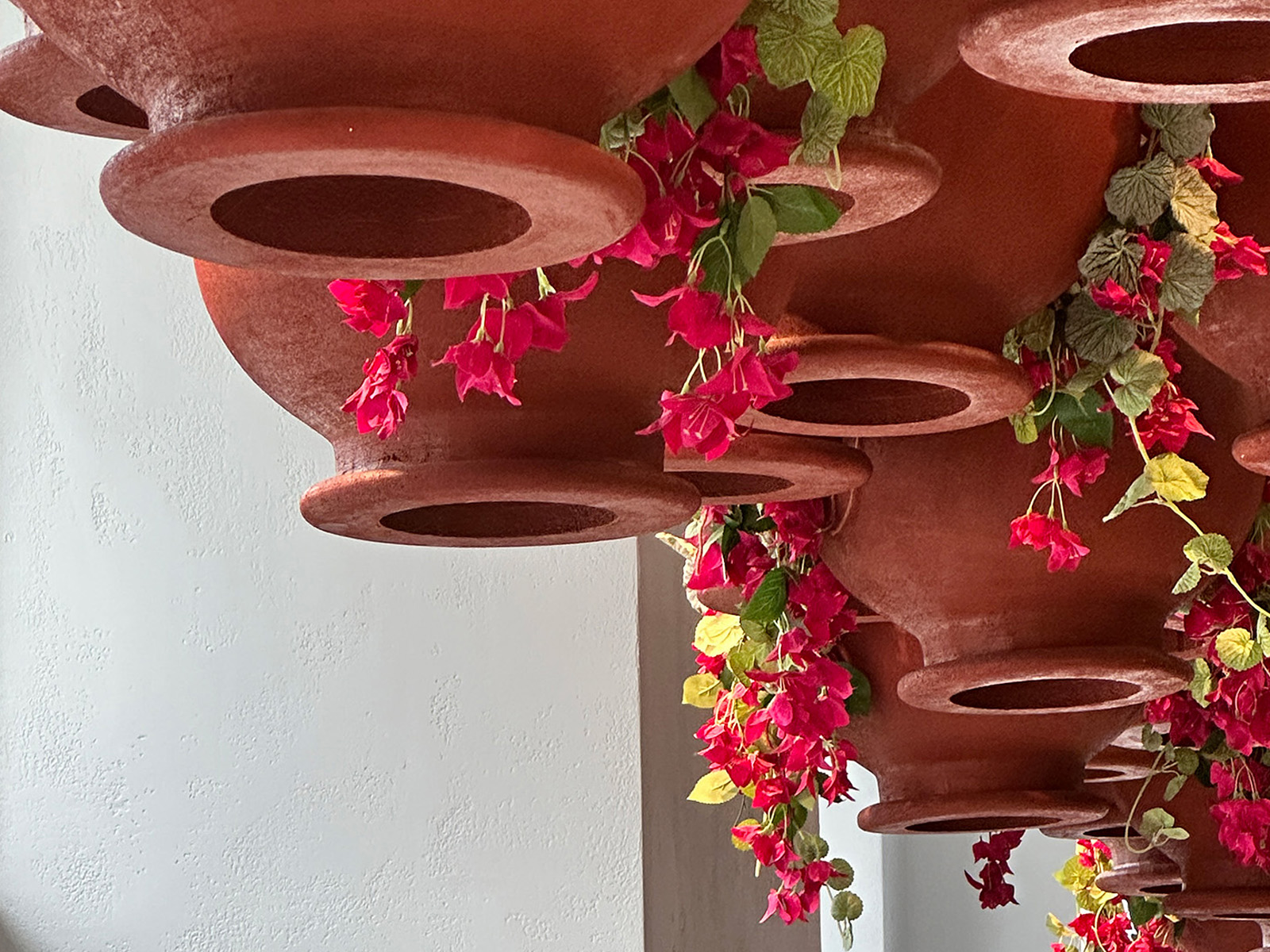
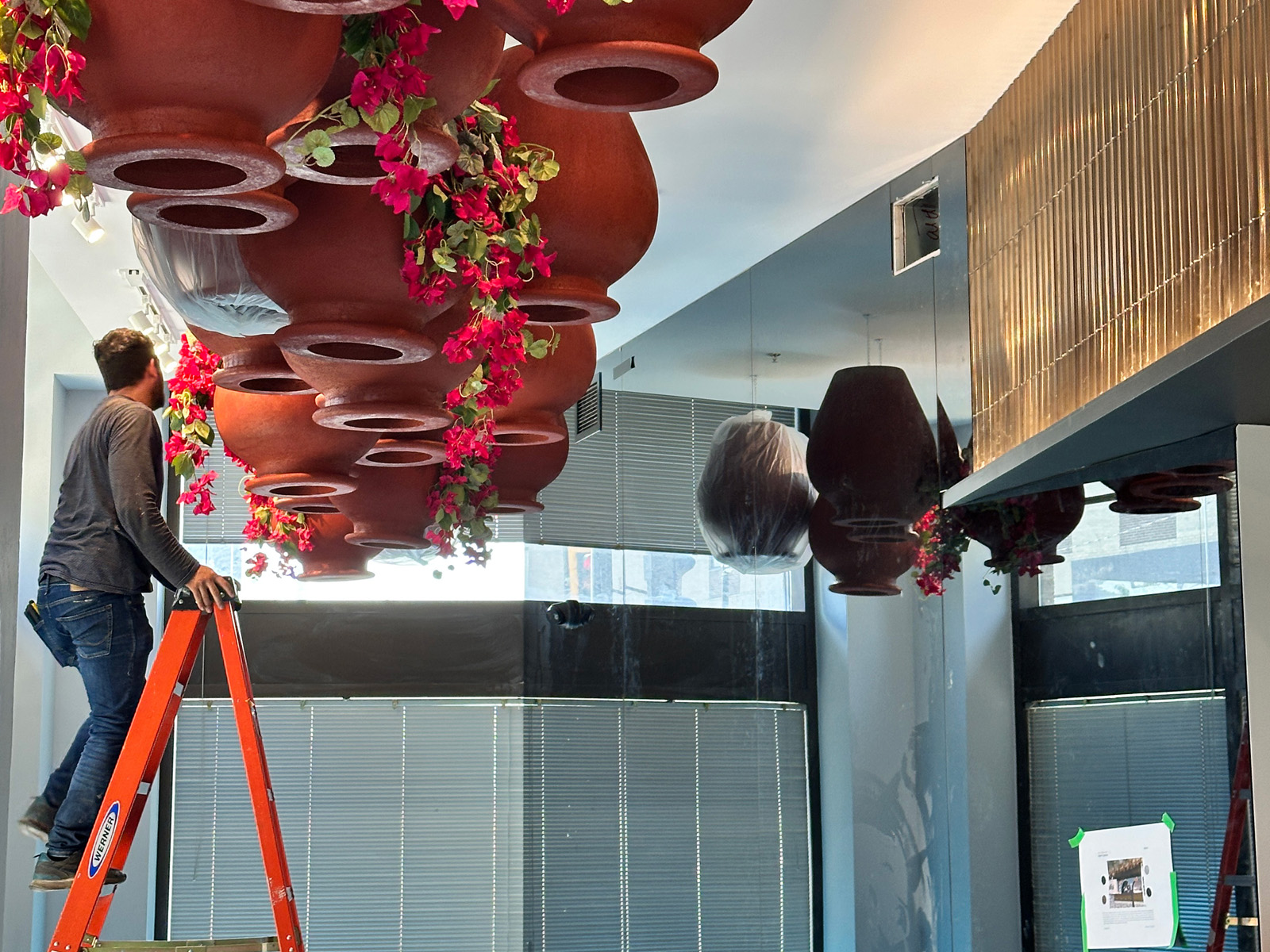
The ceiling installation at Folfol is built from clusters of terracotta pots — the same unglazed clay vessels used across Syria, Lebanon, and the broader Levant for centuries — inverted and grouped overhead, their mouths open downward, red bougainvillea flowers spilling out and cascading toward the room below. It is, in the most literal sense, a garden turned upside down.

The inversion is the idea. A rooftop garden that has come inside, that has descended from above rather than growing up from the ground. It creates an immediate visual surprise — a ceiling that is warm, organic, and alive in a space that is otherwise clean, graphic, and contemporary. That tension is what gives the room its energy.

Folfol’s signature upside-down garden transforms traditional Syrian rooftop greenery into a dramatic ceiling installation of inverted terracotta pots and cascading bougainvillea, creating a memorable cultural experience.Folfol’s signature upside-down garden transforms traditional Syrian rooftop greenery into a dramatic ceiling installation of inverted terracotta pots and cascading bougainvillea, creating a memorable cultural experience.

The choice of terracotta was not decorative. Clay is one of the oldest building materials in Syrian history — present in the mudbrick architecture of ancient Aleppo, in the storage jars of Damascene kitchens, in the water vessels that line courtyard walls. Bringing it overhead, at scale, in a contemporary restaurant is a way of honoring that material memory without explaining it. You don't need to know the history to feel the warmth. But if you do know it, the ceiling rewards you.

Between the terracotta clusters, black pendant lights hang at varying heights — the same dark form, a cooler counterpoint to the clay. They don't compete. They hold the space between the pots and the tables below, creating a layered ceiling that feels both intentional and abundant. Like a market stall overflowing with goods. Like a rooftop in late afternoon.

The best design gestures in a restaurant are the ones that carry meaning without needing explanation — the ones that feel right before you understand why.

At Atelier MIM, we find those gestures in the culture behind the concept. That's where the real design lives.

Book a discovery meeting today with Atelier MIM

Every great space starts with a story.